Trial court · India · Advocate guide
Process Memo
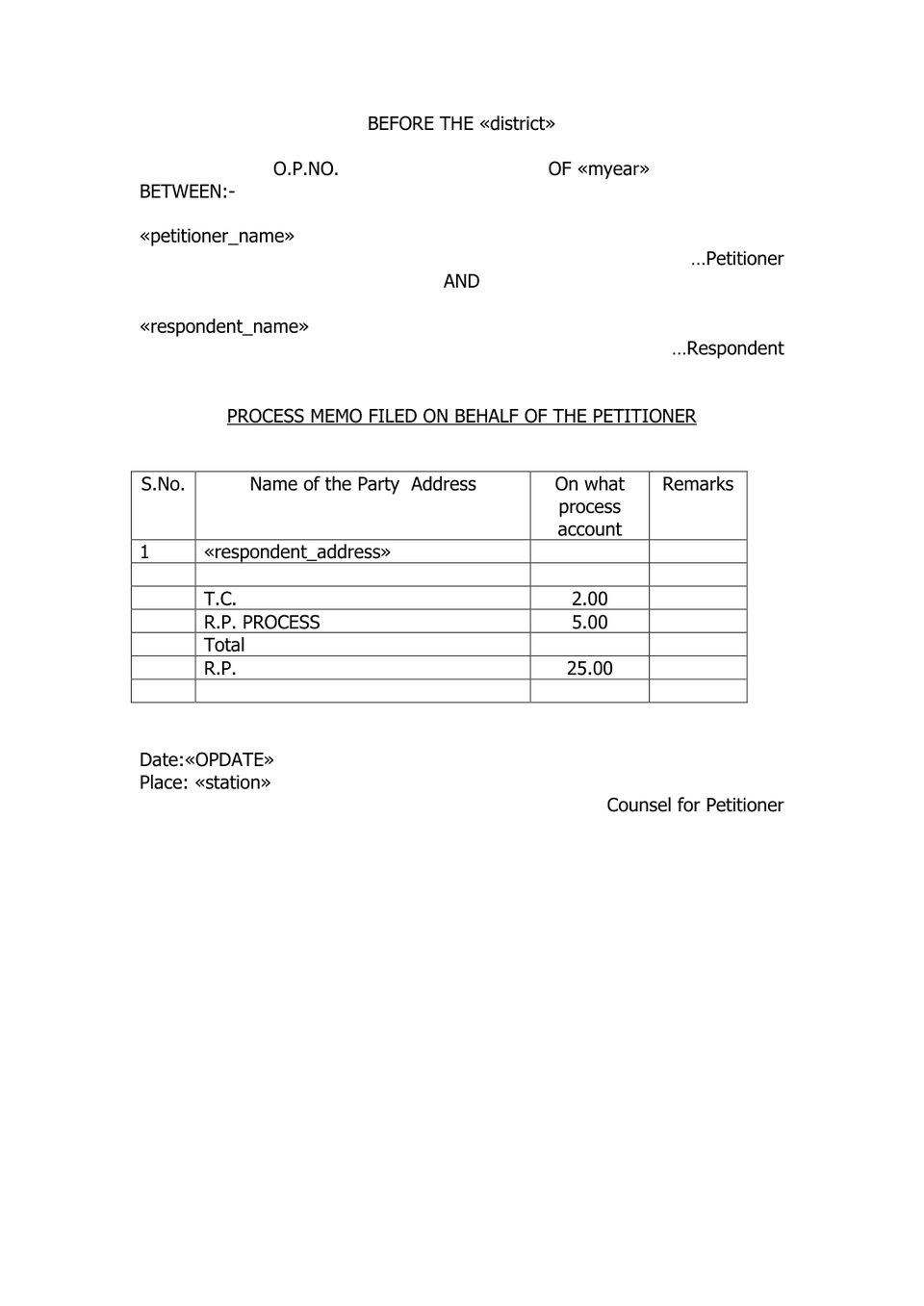
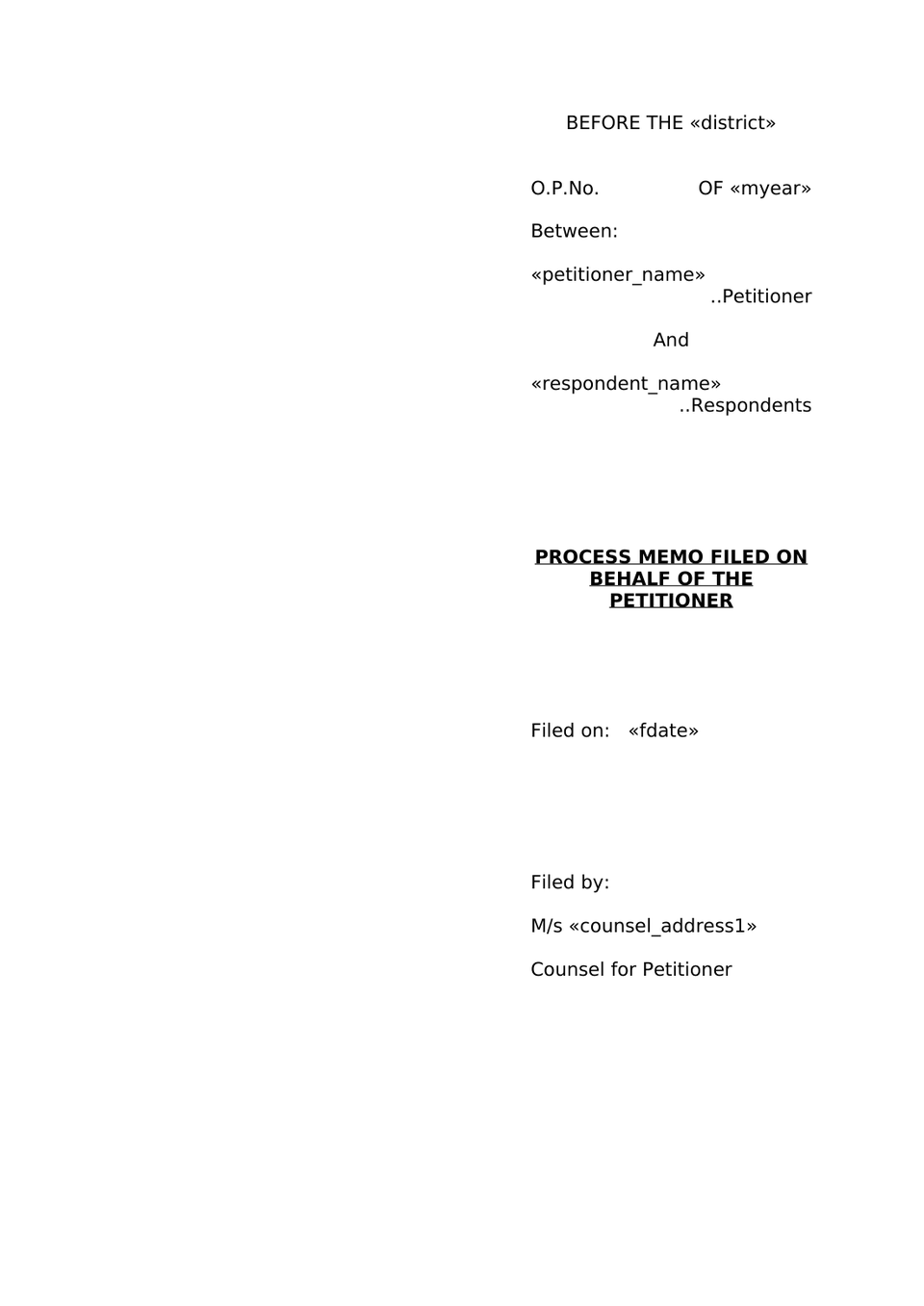
This guide explains the Process Memo for advocates and litigants preparing papers before trial courts in India. It covers purpose, procedure, drafting practice, and free DOCX download on Vaksera.
Last updated: 2026-06-20
Introduction
Advocates appearing before trial courts across India frequently prepare a Process Memo. The document belongs to the category of a memorandum of parties—a formal paper Book that places cause title, party captions, narrative grounds, and prayers before the court in an orderly sequence.
This guide explains the practical purpose of the format, the court context in which it is filed, how to adapt it to your facts, and how to use the free drafting tool on this page to generate an editable Word file.
Where the format title refers to the applicable procedural statute, treat that reference as a drafting signpost only and confirm the live provision, amendment notifications, and local court practice before filing.
What this court format covers
The Process Memo template on Vaksera reflects standard trial court captioning, party blocks, and prayer patterns advocates expect in a memorandum of parties. It does not replace fact investigation or legal research—it organises presentation.
Parties, court heading, and case reference
Verify spelling of parties, parentage, addresses where required, and synchronization with the main case number (CC, CRL, OS, WP, CMP, etc.). Inconsistent captions are a common registry objection.
Narrative grounds and prayers
Grounds should progress logically: background → legal entitlements → why court should grant relief today. Prayers must be numbered and capable of formal orders.
When advocates file this application
Typical chambers use the Process Memo when:
- The matter is pending before a trial court and formal paper is required on record.
- Registry or opposing counsel expects a titled application rather than informal mention.
- Client instructions require quick first draft before detailed revision overnight.
- Supporting affidavits or documents will be filed alongside the main paper.
Historical and doctrinal background
Indian procedural law evolved from colonial-era codes through successive amendments and the introduction of BNSS and BNS in the criminal sphere. Formats used in district and High Courts often retain language familiar to registries even when underlying section numbers change.
Understanding why a memorandum of parties like the Process Memo exists—what threshold it satisfies, what record it creates, and how judges read it on the first listing—helps you draft with purpose rather than copying old files blindly.
Jurisdiction and maintainability
Before finalising the Process Memo, confirm territorial jurisdiction, pecuniary limits, and whether the forum is seised of the principal dispute. Maintainability objections waste listing dates.
Alternative remedies
Courts may ask whether another statutory remedy exists. Address this upfront if your research shows a parallel route—distinguish why the present application is still appropriate.
Interim relief and urgent listings
If you seek stay, status quo, or expedited hearing, state urgency with dates and events. Courts expect a short paragraph on why delay defeats relief and whether notice to the other side was given or should be waived.
Ex parte versus heard motions
Ex parte interim orders are exceptional. Plead efforts made to serve the respondent or why service should be dispensed with. Attach proof of dispatch where available.
Filing and listing procedure (overview)
After preparing the Process Memo, counsel typically files it in the main case or as a miscellaneous application depending on registry classification. Court fee, process fee, and supported affidavits vary by state and forum.
Retain stamped copies, noting of filing, and the next listing date. If interim relief is sought, mention urgency clearly and be ready with a short oral pitch aligned with the written grounds.
Registry and paper Book conventions
Most registries expect double-spacing, margin rules, and annexure indexing for lengthy papers. Match the court’s standing orders on font, pagination, and whether e-filing requires a PDF Book in addition to physical filing.
Service and notice to opposite party
Unless the court permits otherwise, serve advance copy on the respondent or public prosecutor as applicable. Note the mode of service (hand delivery, process server, registered post, or electronic service where permitted) in your chamber diary.
Drafting standards an experienced advocate applies
Senior practitioners treat every application as a persuasion document: crisp facts, clear headings, pinpoint legal propositions, and prayers that match relief sought. Avoid argumentative adjectives; let dates, documents, and statutory hooks carry weight.
- Open with a precise cause title synced to the parent matter.
- State facts chronologically; separate disputed from admitted where possible.
- Cite the legal basis in short paragraphs—one proposition per paragraph.
- Prayers must be specific, feasible, and within the court’s power on that date.
- Annex only what you will rely on; index every annexure.
Evidence and annexures
Every annexure must be referenced in the body (“Annexure P-1 is the…”). Avoid dumping documents without narrative linkage. For sworn statements, ensure verification and notarisation if required.
- Index annexures with brief descriptions.
- Mark copies as seen and admitted where possible before hearing.
- For electronic records, explain authenticity and Section 65B compliance if relied upon.
After the order: compliance and review
Once orders are passed, counsel must communicate to the client, arrange compliance, and apply for certified copies. If the order is adverse, evaluate limitation for appeal or revision promptly.
Common mistakes to avoid
Experienced advocates routinely catch:
- Mismatch between prayers and grounds actually argued.
- Wrong statute cited after legislative substitution (IPC/BNS, CrPC/BNSS).
- Missing affidavit or defective verification.
- Failure to obtain prior directions for ex parte interim relief.
- Annexures not referred to in the body of the application.
Preparing this format on Vaksera
Use the form above to enter court details, party names, case numbers, and counsel particulars. Blank fields remain blank in the downloaded Word file. Click Refresh Preview to review the draft, then Download petition for chamber editing and filing.
Conclusion
The Process Memo remains a staple in trial court litigation. Invest time in facts and law first; use the template to present your work with clarity and registry discipline. The drafting tool on this page helps you begin faster—final review always rests with counsel.
Browse more Trial court formats · All petition formats · Back to drafting tool
Frequently asked questions
Disclaimer
This article is for general information and drafting assistance only, not legal advice. Verify all statutes, rules, and court-specific filing requirements before filing. Vaksera does not guarantee acceptance of any draft.