High Court · India · Advocate guide
Bail
This guide explains the Bail for advocates and litigants preparing papers before high courts in India. It covers purpose, procedure, drafting practice, and free DOCX download on Vaksera.
Last updated: 2026-06-20
Introduction
Bail jurisprudence in India balances personal liberty with investigation and trial integrity. A Bail filed before the high court is often the first decisive document determining whether an accused remains in custody or is released on conditions.
Drafting must track the governing code (BNSS/BNS post-reform or CrPC/IPC where still applicable) and local precedents on default bail, anticipatory bail, and cancellation.
Categories of bail in practice
Advocates distinguish:
- Regular bail after arrest.
- Anticipatory bail under Section 438 CrPC / corresponding BNSS provision.
- Default bail for investigative delay.
- Interim bail pending final hearing.
- Bail cancellation applications by the prosecution or complainant.
Grounds courts weigh
Courts examine nature and gravity of accusation, criminal history, flight risk, tampering concerns, and whether investigation can continue if bail is granted. Medical or humanitarian grounds require evidence.
Structuring grounds in the petition
Your Bail should separate factual innocence or weakness of evidence paragraphs from jurisdictional points and parity with co-accused. Cite controlling High Court decisions sparingly but precisely.
Filing and listing procedure (overview)
After preparing the Bail, counsel typically files it in the main case or as a miscellaneous application depending on registry classification. Court fee, process fee, and supported affidavits vary by state and forum.
Retain stamped copies, noting of filing, and the next listing date. If interim relief is sought, mention urgency clearly and be ready with a short oral pitch aligned with the written grounds.
Registry and paper Book conventions
Most registries expect double-spacing, margin rules, and annexure indexing for lengthy papers. Match the court’s standing orders on font, pagination, and whether e-filing requires a PDF Book in addition to physical filing.
Service and notice to opposite party
Unless the court permits otherwise, serve advance copy on the respondent or public prosecutor as applicable. Note the mode of service (hand delivery, process server, registered post, or electronic service where permitted) in your chamber diary.
Drafting standards an experienced advocate applies
Senior practitioners treat every application as a persuasion document: crisp facts, clear headings, pinpoint legal propositions, and prayers that match relief sought. Avoid argumentative adjectives; let dates, documents, and statutory hooks carry weight.
- Open with a precise cause title synced to the parent matter.
- State facts chronologically; separate disputed from admitted where possible.
- Cite the legal basis in short paragraphs—one proposition per paragraph.
- Prayers must be specific, feasible, and within the court’s power on that date.
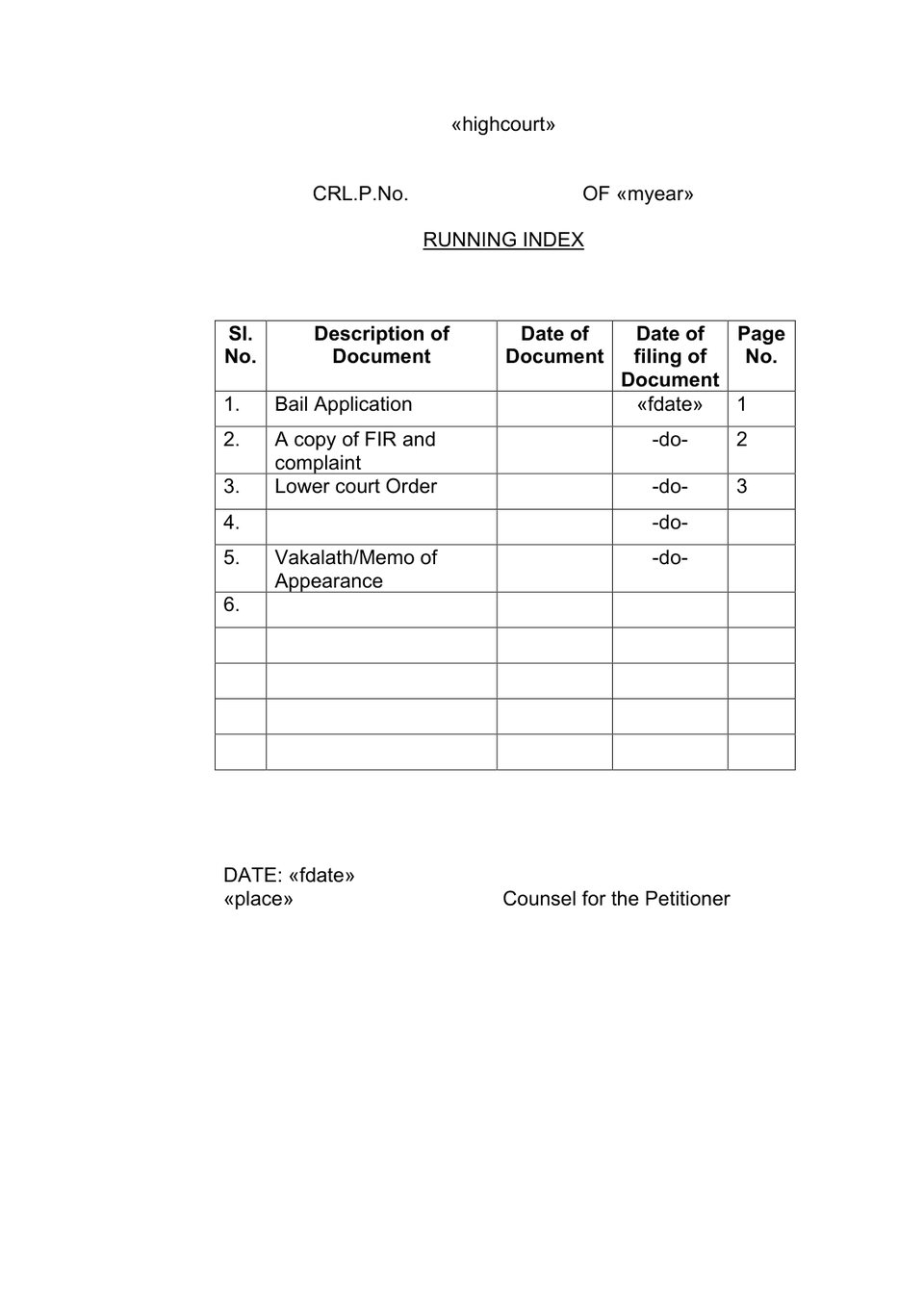
- Annex only what you will rely on; index every annexure.
Preparing this format on Vaksera
Use the form above to enter court details, party names, case numbers, and counsel particulars. Blank fields remain blank in the downloaded Word file. Click Refresh Preview to review the draft, then Download petition for chamber editing and filing.
Conclusion
The Bail remains a staple in high court litigation. Invest time in facts and law first; use the template to present your work with clarity and registry discipline. The drafting tool on this page helps you begin faster—final review always rests with counsel.
Browse more High Court formats · All petition formats · Back to drafting tool
Frequently asked questions
Disclaimer
This article is for general information and drafting assistance only, not legal advice. Verify all statutes, rules, and court-specific filing requirements before filing. Vaksera does not guarantee acceptance of any draft.